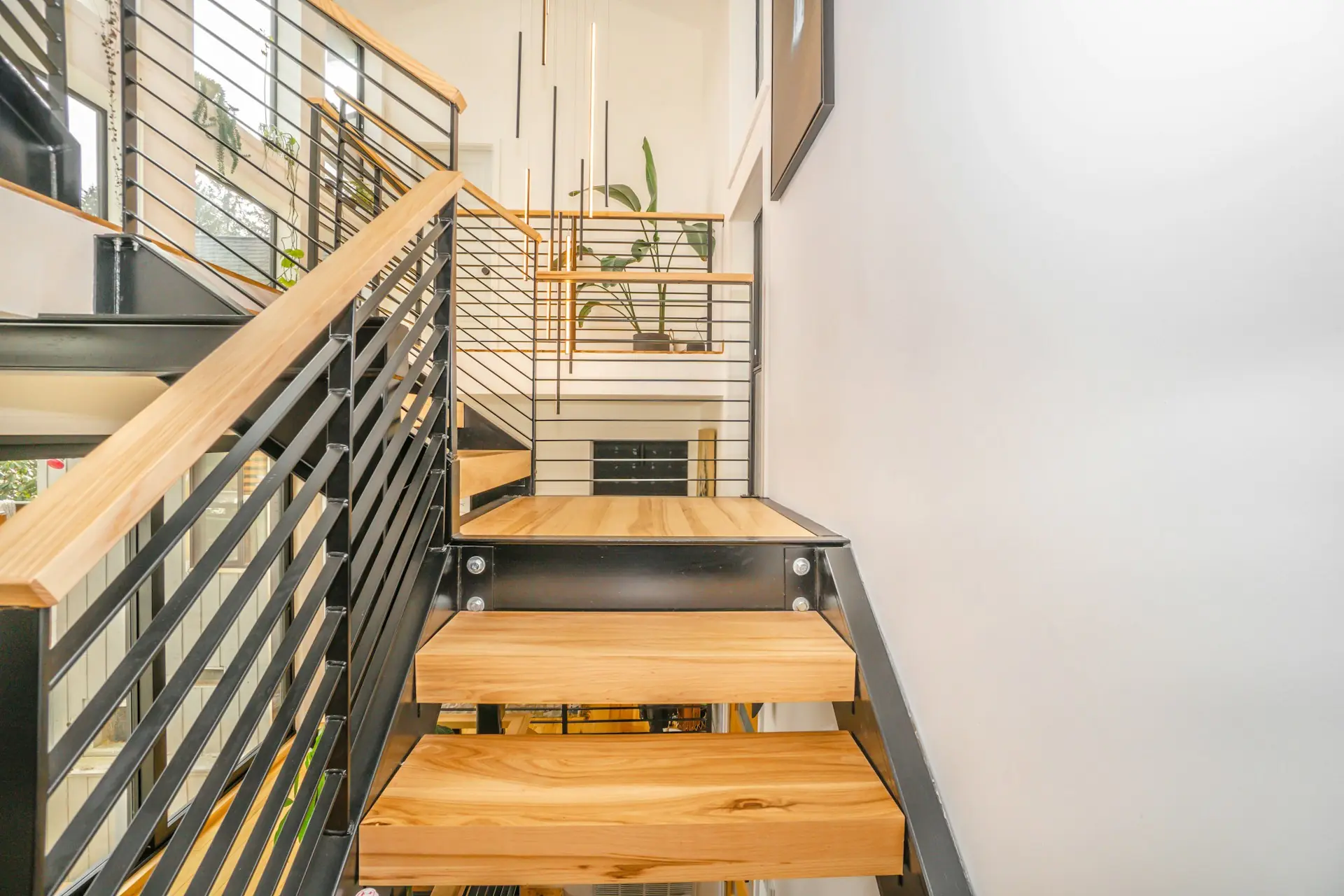
You have a stair rail that fights the architecture, or a range hood that looks anonymous next to a serious kitchen. That is usually the moment custom metal fabrication in Chicago enters the conversation. The real question is not whether a shop can build to your drawing. It is whether the piece that arrives on site matches the intent you approved on paper.
That gap is where good projects lose their edge. A designer specifies a slim blackened steel guard with hairline welds and a specific reveal at the floor. A disconnected shop delivers something close enough. Close enough is what you live with for twenty years.
Studios that keep design, fabrication, and installation under one roof close that gap, because the person drawing the detail answers to the person building it.
Keep reading to learn how bespoke metal is specified, drawn, cut, welded, finished, and installed inside a full-service interior process. By the end, you will know what to ask a designer about tolerances, samples, and coordination before you approve a single fabrication proposal.
Where Bespoke Metal Makes an Interior More Functional
Custom metal earns its place when it solves a problem a catalog product cannot. In residential and commercial interiors across Chicagoland, that usually means fitting an odd dimension, carrying a finish story across rooms, or standing up to daily contact without looking worn.
Stair Rails and Guards That Complement the Architecture
A stair rail is the most touched piece of metal in a home. Custom fabrication lets you set the exact handrail diameter, the spacing of guards, and how the assembly meets the stringer or the wall. In a Lincoln Park greystone, a thin blackened carbon steel rail keeps sightlines open on a narrow run.
In a River North condo, brushed stainless or bronze-toned brass reads calmer against glass.
Range Hoods, Wall Panels, and Window Frames With Presence
Hoods and panels are where sheet metal does quiet architectural work. A custom hood can be built to the exact width of the cabinet run, with a seamed edge instead of a bolted trim strip. Copper and aged brass develop a living patina. Stainless and aluminum hold a stable, even tone.
| Metal | Common Interior Use | What to Expect |
|---|---|---|
| Stainless steel | Hoods, counters, panels | Durable, consistent, easy to clean |
| Carbon steel | Rails, guards, frames | Takes blackened or waxed finishes |
| Aluminum | Window frames, light panels | Light, corrosion-resistant, powder coats well |
| Copper / brass | Accents, hoods, hardware | Patinas over time unless sealed |
Furniture Bases and Cabinet Hardware Built for Daily Use
Table bases and cabinet pulls take abuse, so gauge and weld quality matter more than styling. A custom pull can be sized to the drawer face and machined to fit a specific bore, which off-the-shelf hardware rarely does.
Once you know which elements deserve custom metal work, the next decision is where the process actually starts.
Start With the Space, Not the Shop Drawing
Good metalwork begins with the room, not the CAD file. Measuring, proportion, and clearances get resolved before a metal fabricator quotes anything. A drawing built on a guess produces a part that does not fit.
Aligning Proportion, Finish, and Material With the Interior Vision
Metal has to agree with everything around it. A heavy 2-inch rail overwhelms a delicate stair. A thin one looks flimsy beside wide-plank oak. Finish direction matters too. Brushed grain running horizontally across a panel reads differently than vertical grain under the same lighting.
Taking Field Measurements in Chicago’s Older Buildings and High-Rises
Older Chicago housing stock is rarely square. Floors slope, walls bow, and stair risers vary by a quarter inch or more from top to bottom. Field measurements taken after demolition, not before, prevent the most expensive surprises. High-rise work adds its own limits. Elevator dimensions, freight windows, and building rules that cap on-site welding.
Resolving Traffic Flow, Clearances, and Code Requirements Early
Guard height, opening size, and handrail graspability are code items, not preferences. Chicago also enforces permitting and construction and renovation requirements that shape what gets installed and when.
Where structural loads are involved, engineers should sign off before fabrication. Quality assurance checks should reference those approved dimensions. With the space understood, the drawings can finally do their job.
From Design Documentation to Fabrication Details
This is where intent becomes buildable information. Plans, elevations, and physical samples define scope so the shop is not interpreting. Neither is the installer.
Using Plans, Elevations, and Samples to Define the Scope
A complete package shows the piece in context and in isolation: overall dimensions, connection points, material thickness, weld treatment, and finish. Attach a physical sample chip to the specification. Two shops can both deliver “satin brass” and produce visibly different results.
Selecting Cutting, Forming, and Welding Methods
Method choice affects both appearance and cost. Typical decisions include:
- Laser cutting for clean, repeatable profiles and perforated panel patterns
- Punching for fast, uniform holes in production runs
- Forming on a press brake to set crisp bend radii on sheet metal
- TIG welding where the joint will be visible and needs to be ground nearly invisible
- Certified welders for structural connections that carry real load
Reviewing Mockups and Finishes Before Full Production
Approve a mockup before the full run. A single rail section or a 12-inch panel sample tells you what a rendering cannot: how light hits the finish, how the weld reads, how the edge feels. Skilled fabrication is still a hands-on trade, as this look at modern metalworking craftsmanship illustrates. Quality control at this stage costs hours. Catching it at install costs weeks.
Documentation only holds up if one team owns it from drawing to delivery.
Why Integrated Coordination Protects the Finished Result
Metal rarely fails on its own. It fails at the joint between trades. This is why coordination decides the finished result more than any single fabrication step.
Avoiding the Translation Gap Between Design Intent and Shop Execution
When a third-party shop receives a drawing without context, it optimizes for its own workflow. Reveals get standardized, welds get simplified, mounting hardware becomes whatever is in stock. Many metal fabrication services are built around contract manufacturing, original equipment manufacturer (OEM) runs, or point-of-purchase displays. All of these reward speed over nuance.
Coordinating Metal With Millwork, Stone, Lighting, and Installation
Interiors are assemblies of dissimilar materials meeting at tight lines. A steel toe kick has to align with cabinet scribes. A hood has to clear a stone backsplash by a consistent margin. When metal and custom millwork fabrication happen under the same roof, those junctions are resolved in the shop instead of negotiated on site.
The in-house handoff also lets a cabinet be built around the metal part rather than trimmed to accept it.
Creating a Clear Path From Procurement Through Final Assembly
Lead times drive the schedule. Finishes, glass, and specialty hardware often arrive later than the metal itself, so procurement and assembly sequencing get planned alongside the interior design project timeline. One schedule, one accountable party, fewer gaps.
Scope, of course, still depends on the kind of project you are building.
Choosing the Right Scope for Residential and Commercial Projects
The right amount of custom metal is the amount that solves real problems. Residential and commercial projects reach that answer differently. Construction sequencing follows.
Refined Residential Details for Kitchens, Entries, and Living Spaces
In homes, metal works best as a small number of deliberate moves: a stair guard, a hood, a fireplace surround, a set of matching pulls. Concentrating the budget on two or three visible elements produces a stronger result than spreading it thin. This pairs naturally with residential interior design services where the metal is drawn at the same time as the cabinetry.
Commercial Interiors That Balance Durability and Brand Expression
Commercial spaces need finishes that survive traffic and cleaning. Heavier gauges, powder coating, and replaceable components matter more than they do at home. A reception desk face, a display system, or a partition frame carries brand identity while taking daily contact. This is why commercial interior design projects treat metal as both aesthetic and infrastructure.
Questions to Ask Before Approving a Fabrication Proposal
Many shops serve heavy industries such as trailers, energy, mining, aerospace, and defense. Those capabilities are real, but they are not the same as interior finish work. Ask:
- Have you built architectural pieces at this level of finish before?
- Who takes the field measurements, and when?
- What mockups or samples do I approve before production?
- How are welds treated where they will be visible?
- Who is responsible if the piece does not fit on site?
- What is the lead time, and what drives it?
The clearer those answers, the easier it becomes to fold metalwork into the larger design.
Bring the Metalwork Into the Larger Vision
Custom metal reaches its potential when it is designed as part of the whole interior. Not ordered separately at the end. That means one team holding the drawings, the shop schedule, and the install.
Begin With a Collaborative Project Conversation
Every strong project starts with listening: how you use the space, what the room has to accomplish, and where metal genuinely improves it.
Threshold Design Lab has spent three decades on Chicago design, remodeling, and fabrication work. That conversation always comes before any specification. Bring photos, dimensions, and the details that bother you. Past design and build projects are a useful reference point for that discussion.
Coordinate Design, TDL Custom Fabrication, and Installation
TDL Custom, the in-house fabrication arm and a boutique Chicago millwork studio, builds the millwork and coordinates the custom metal work so both meet correctly on site. Quality assurance happens at the bench, not during punch list. Whether the scope is a single stair rail or a full kitchen with integrated metal and cabinetry, the sequence stays the same: listen, document, fabricate, install.
Start the conversation about your Chicago renovation. Tell us about your project, and we will walk you through what the process looks like from concept through installation.
Frequently Asked Questions
What Types of Metal Can a Fabrication Shop Work With?
Most architectural shops work in stainless steel, carbon steel, aluminum, brass, bronze, and copper. Each behaves differently under heat, finishing, and daily use, so material choice should follow the location and the finish you want.
How Much Does a Custom Metal Fabrication Project Typically Cost?
Cost depends on material, gauge, complexity of forming, weld finishing, and installation access. A set of custom pulls sits at one end of the range: a full stair guard with structural connections sits far higher. Ask for pricing broken out by material, labor, finish, and install.
How Long Does It Take to Complete a Custom Metal Fabrication Order?
Simple pieces often run four to eight weeks after drawings and finishes are approved. Larger assemblies with specialty finishes or engineering review take longer. Field measurement timing usually controls the schedule more than shop capacity.
Can a Fabricator Create Custom Railings, Stairs, and Architectural Metalwork?
Yes, provided the shop has architectural experience and certified welders for load-bearing work. Ask to see completed railings and stairs at a comparable finish level, not just industrial or structural examples.
Do Metal Fabrication Shops Provide Design, Welding, Finishing, and Installation Services?
Some do all four; many handle only fabrication and hand off install. Confirm early who is responsible for shop drawings, finishing, and on-site fitting. That is where accountability usually breaks down.
How Can I Choose a Reliable Metal Fabrication Company in Chicago?
Look for documented drawings, mockups before production, and clear responsibility for measurements and installation. A firm that also handles custom cabinetry in Chicago can coordinate the metal and millwork junctions that otherwise get resolved on site.